

Venture capital is often explained through the language of term sheets, liquidation preferences, ownership, and governance. Those concepts matter. They shape how investors and founders align incentives and think about outcomes over time.
But from Acephalt’s perspective, there is another layer of venture capital that gets far less attention and has become just as important: how investment decisions actually get made in practice.
Before an investor negotiates terms, they need to understand the company in front of them. In today’s market, that work is happening under intense time pressure, across more deals, with more fragmented information than ever before. Acephalt is built for that exact challenge — enabling due diligence at machine speed, helping investors automate deal workflows, surface facts, flag risks, and organize insights from origination to close.
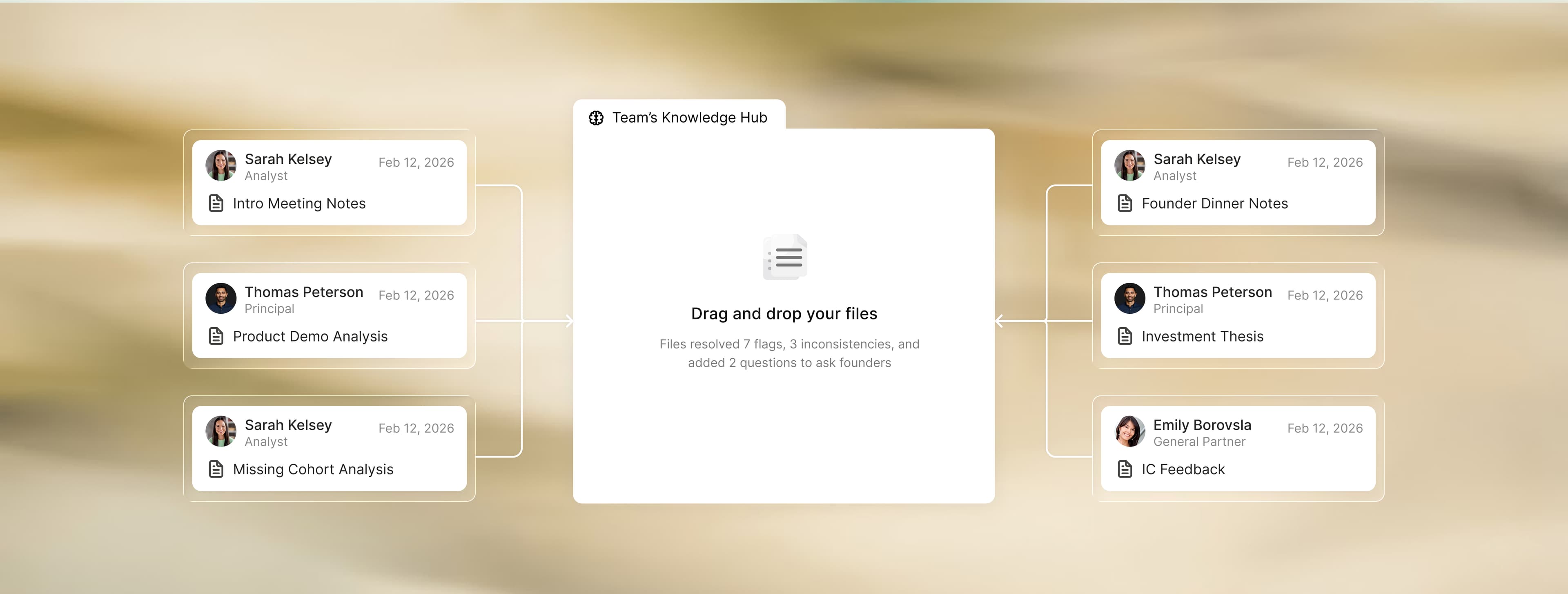
Figure 1. Acephalt’s value proposition: turn fragmented diligence inputs into faster, decision-ready outputs.
The workflow problem traditional education ignores
Traditional venture education tells you how venture financing works. Acephalt focuses on helping firms operate more effectively inside the investment process itself.
In many firms, diligence is still spread across PDFs, decks, notes, spreadsheets, meeting recordings, and disconnected tools. Teams lose time stitching together fragmented views of the same company. Important insights live in different places. Questions get repeated. Risks are spotted too late. Momentum slows down — not because investors lack judgment, but because the workflow around that judgment is outdated.
Acephalt’s internal positioning is clear: due diligence is still far too manual and fragmented, even though startups are moving faster than ever.
A connected system for the full deal lifecycle
Rather than treating diligence as a loose collection of tasks, Acephalt is building a connected system for the full deal lifecycle. The workflow is structured simply: upload the data room, analyze the company structure and risk, filter and compare opportunities, and then take action with more confidence.
The platform helps firms spend minutes understanding a deal instead of days, while supporting collaboration, integrations, and flexible deployment through both a full platform and API-based workflows.
Disconnected process vs. connected pipeline
Fragmented
Typical diligence today
- Context lives in disconnected tools
- Questions repeated across stages
- Risks spotted at the last moment
- Institutional knowledge lost between deals
- Senior time spent on synthesis, not judgment
Connected
Acephalt pipeline
- Single workspace from origination to close
- Facts and risks surface without repetition
- Coverage gaps flagged before meetings
- Context preserved across the entire deal
- Partners review signal, not sprawl
The OS of deal flow
From the Acephalt lens, the future of venture investing is not just about better capital allocation — it is about better investment infrastructure. Acephalt’s investor materials frame this as becoming the “OS of Deal Flow”: unifying screening, research, Q&A tracking, investor deliverables, and workflow automation in one system.
The best firms will not only have sharp partners and strong networks; they will also have systems that help them evaluate opportunities faster, preserve institutional knowledge, and maintain rigor as deal volume increases. That matters because the gap between seeing a deal and understanding a deal is where opportunities are won or lost. Acephalt is built to shrink that gap.
Complementing traditional venture knowledge
This is also why Acephalt complements rather than replaces traditional venture knowledge. Investors still need to understand securities, governance, pricing, and negotiation. But none of those matter if the diligence process itself is too slow, too scattered, or too inconsistent to produce conviction.
In practice, great investing depends on both financial understanding and operational execution. Acephalt sits squarely in that second category: helping investors move from raw information to structured insight, from fragmented tools to a unified process, and from manual review to a smarter, faster system for decision-making.
Diligence as a strategic advantage
At a broader level, that shift reflects where venture capital is headed. Markets are more competitive. Founders expect faster answers. Firms are expected to process more information with the same or leaner teams.
In that environment, diligence can no longer be treated as a back-office burden. It is becoming a strategic advantage. The firms that can identify risk sooner, synthesize evidence faster, and collaborate more effectively will make better decisions over time.
Acephalt is building for that future — one where due diligence is not an obstacle to dealmaking, but an edge within it.